Shipping guidance
Shipping produce to China: 6 details to prepare before booking a truck
From product type and packaging to collection dates: prepare clear shipment details for a Vietnam–China transport plan.
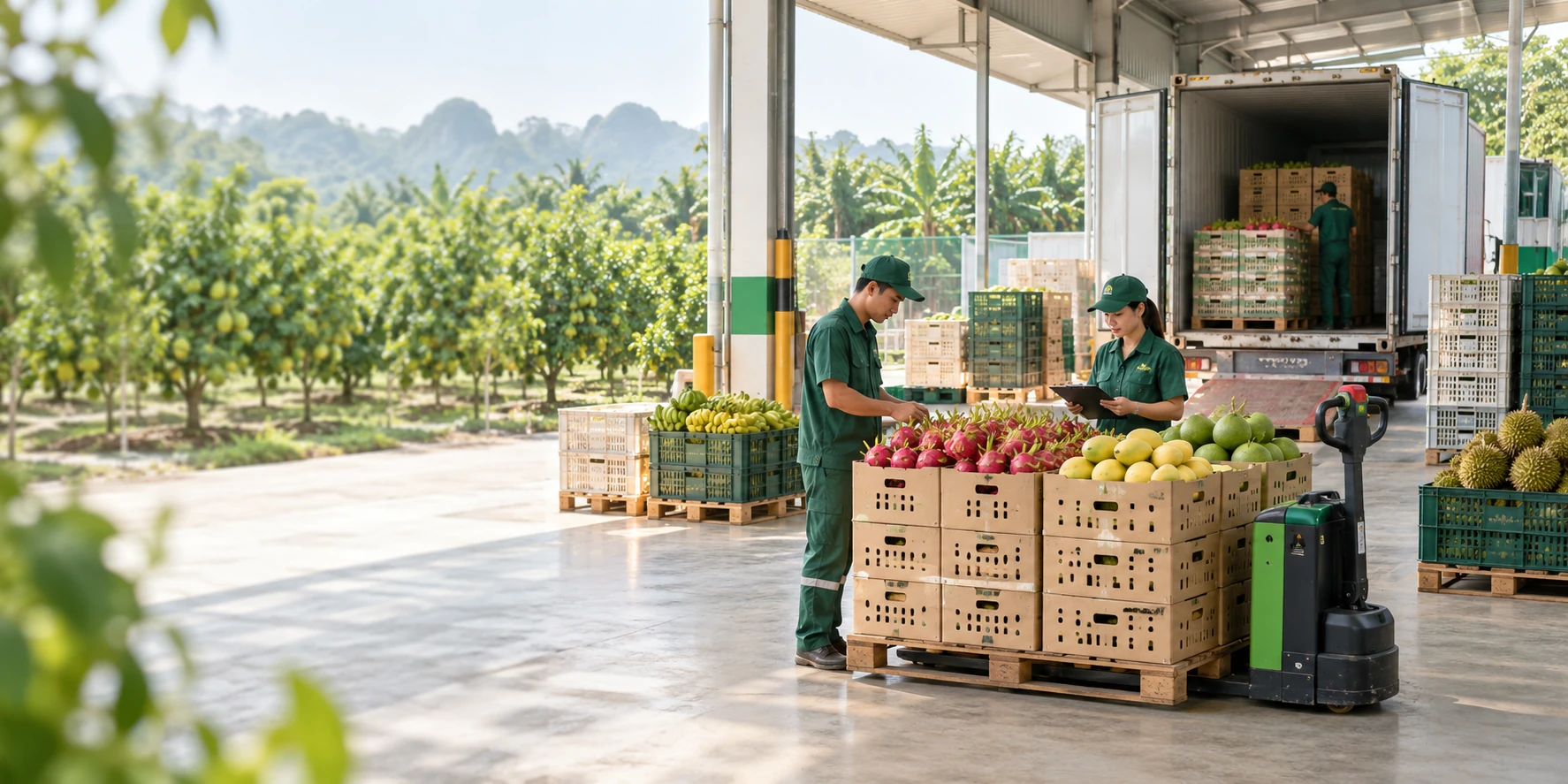
A smooth shipment begins with clear information. For produce from the Mekong Delta, Southeast or Central Highlands to China, align harvesting, packing and delivery before booking a truck. These six groups of details help everyone start with a concrete discussion.
1. Specify the product and its actual condition
“Agricultural products” is a category, not enough for a specific shipment plan. Start with the product name, condition at handover and relevant characteristics. For durian, distinguish whole fruit from processed products; for other fruit, state whether it is fresh or frozen where applicable.
Provide storage requirements in writing. Do not assume two fruits can travel under the same conditions simply because both are agricultural products.
2. Distinguish product weight from packed weight
Include estimated weight and carton or pallet counts. If quantities are estimates, state when they can be confirmed so all parties can plan ahead.
- Product weight and total packed weight, if available.
- Carton count, carton dimensions and expected pallet count.
- Whether cargo is loose or palletised, and whether a forklift is needed at collection.
For example, “about 10 tonnes in 1,000 cartons, not yet palletised” is more useful than “a truck for fruit”. This is an example of a description, not a loading standard.
3. Confirm packing specifications before collection
The packer and shipper should agree on packaging materials, stacking and batch identification. Cartons must suit handling and stacking; fresh produce packaging should also allow ventilation. FAO notes that packaging and stacking must permit airflow through the load. FAO guidance on packaging.
Send photos of cartons, pallets and the loading area so the carrier can assess collection conditions. If specifications change at the last minute, update the plan rather than leaving old information in place.
4. Confirm both ends of the delivery precisely
The collection point needs an address, map location, responsible person and phone number. Explain road access, parking and handling equipment at the warehouse. The company address may differ from the loading location and should not be used interchangeably.
For China, provide the receiver's name, contact details, delivery address and any appointment requirements. A city name alone does not define the full delivery leg.
5. Align the truck schedule with cargo readiness
Separate the planned harvest date, packing completion date and time the cargo can be handed over. Coordinate transport with the destination's receiving capacity, not just the shipper's preferred departure date.
For cross-border transport, confirm acceptance conditions and document readiness before fixing the schedule. Agree how delivery estimates will be updated when circumstances change; an estimated time is not an automatic guarantee.
6. Send an easy-to-check summary
Use the following template when contacting Cát Việt by email or Zalo:
Cargo type: … / Cargo condition: …
Weight: … / Cartons, pallets: …
Packing & storage: …
Collection point: … / Contact person: …
Delivery point: … / Receiving contact: …
Cargo ready from: … / Requested delivery date: …
This summary keeps the discussion focused on the actual shipment. Once a plan is agreed, keep the schedule, scope of work and contact details available for collection and delivery.